beautiful-own-with-amazing-golden-eyes.jpg

Blog (by JH, no AI)

Thoughts on Psychotherapy

Blog | Dr. Jamey Hecht | Beverly Hills, CA
 
Posts in Self Esteem
Gift-Giving: Perils and Possibilities

A client came into session today looking mildly dejected. He wanted me to know it was nothing he couldn't handle. But something was bothering him, and he didn’t entirely approve of his own discomfort. He explained that his wife’s birthday was a few days ago, and they had experienced another go-round in a pattern they’ve played-out before on anniversaries, Valentine’s day, and Christmas. He puts in plenty of effort, but she’s usually disappointed in the results, and he blames himself. 

Read More

Body Image: It's the Feelings, Not the Facts

If you’re married, or in a committed relationship, the way your partner responds to your physicality is probably part of how you feel about what you see in the mirror. Give each other the working materials to easily generate an erotic home-base that feels hot and sexy sometimes, warm and friendly most of the time, and coldly evaluative never. Judgements and measurements are for competition, and home is not a place to compete.

Read More
When He Feels Judged and She Feels Unheard: A Way Forward for Men

When a man relentlessly defends himself in an argument with a woman, he is usually doing it to protect the goodness of his character: I am a good person! Can’t you see that? When a woman exerts indignation in a relationship with a man, she is usually asserting her rights, her boundaries, her prerogatives:I matter! Can’t you see that? Until the man stops trying to prove to her, and to himself, that he is indeed “good” and not “bad,” he cannot go about the urgent business of showing the woman that she—her needs, her dignity, her work, her feelings—really does matter to him.

Read More
Addiction, or No?

A habit merits the term “addiction” when it costs you more than it’s worth; when you try to stop it, but find you can only put it “on pause” for a short while; and when you find your thinking (especially your judgment) is distorted by the high priority you place on repeating the habit. Another criterion is perhaps less important because it’s outside you, but it can be very important indeed: when multiple neutral or friendly people tell you they think you have a problem—especially if they haven’t spoken to each other about it beforehand. 

Read More
People-Pleasing Pleases Nobody

It’s true that people-pleasing and self-effacement are much better than the opposite extreme—where narcissists act as if the world owed them everything they could ever want, going through life exploiting others by deception, cheating, and entitlement. But there is a vast, wholesome, fertile middle-ground between these extremes.  

Read More
Loving Self-Acceptance: Getting Started

The fundamental reason to love yourself is because it is your right and role, your dharma, your vocation as a living organism on this planet. But if that currently feels too foreign and far-off, be motivated by altruism. How would you feel and act if the person you love was being treated the way you treat yourself? You would intervene protectively; you would make emotional contact, to make sure the person was ok; and you would help your beloved to defend against attacks. Do that for yourself, as a matter of ordinary responsibility, like washing your hands after you use the bathroom, or like offering a glass of water to somebody who obviously needs it. Decency. If you can’t be kind to yourself, start with being polite to yourself, and work your way up to lovingkindness.

Read More
If You Could've Done Better, You Would Have

We often want to help people with their regrets, by telling them: “If you could have done any better, you would have. The reason you didn’t, is that you were constrained by your trauma background, your history.” They reply that this is a slippery slope; that if they allow themselves the solace of explaining their bad choices by invoking their past history, they might recklessly let themselves off the hook for all kinds of error—laziness, impulsivity, greed—in the present and the future. But it is not a slippery slope, so long as we locate the determinism in the past, where it belongs, and the freedom in the present, where we need it.

Read More
Masochism: The Need for Punishment

Kink is not to be pathologized, and people who enjoy it don’t have to fear that therapy will take their kinks away. But kink should be fully voluntary, an informed and deliberate selection among the options for a healthy sex life. Your submissiveness or sexual masochism might be an unchosen temperament that you discover inside yourself, but the erotic exercise of it ought to be a free choice.

Read More
Couple's Therapy: Why Fights Escalate & How To Stop Them

When couples argue, it’s usually about one person’s perception of unfair treatment from the other person. Someone feels some kind of injustice, and then takes a chance on bringing it up, hoping for a resolution of some kind (e.g., an apology). But when an argument becomes a fight – when it really goes off the rails, so that both people get caught up in rage –  it’s usually because someone felt as if their personal value as a human being has come under threat. Depending on that person’s life history, they may be more susceptible to feeling that way, even when it’s triggered by something pretty trivial.

Read More
Motivation: Discipline vs. Curiosity

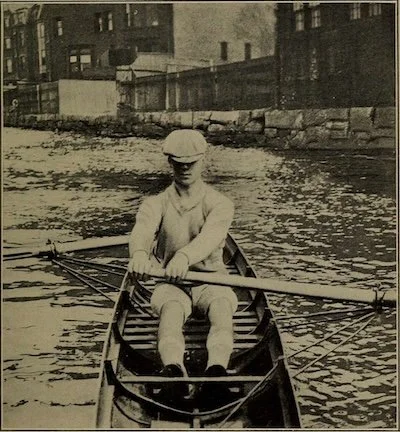
I had a teacher years ago—a brilliant, soulful teacher of Ancient Greek, the late Jack Collins—whose maxim was “To row is human; to sail, divine.” Of course it was a play on the old proverb “To err is human; to forgive, divine.” What he meant was that there’s a place for discipline, and it’s often necessary, especially near the beginning of a project. But after discipline has done its work, after it’s gotten us launched, rowing our boat away from land, pushing on the oars, there comes a time when discipline is no longer needed, and the serious joy of the work takes its place.

Read More
The Good News Is That You Are Good Enough

When you start to love yourself, it will soon become clear that the love that you have inside—which is yours to give, when and where you want to—is very high-quality, and it’s going to get even more valuable as you grow. It’s the good stuff. It is worth a lot. You can be a source of the good stuff, giving as well as receiving. When you’re accustomed to feeling like a vacant cave of darkness, a black hole from which not even light can escape, it’s strange to think you might turn into a star that radiates light instead. But it happens.

Read More
You are all the ages you've ever been.

Whatever your age, you are also all the ages you’ve been before. Part of your psyche is an infant, because past selves remain as parts of an increasingly complex self-system. Younger parts of self, with unhealed wounds and unmet needs, can interfere with adult life, until they get the necessary loving care from the most adult parts of self. Now, without an awareness that the self has parts, we are likely to feel crazy the moment our feelings do not agree with one another. I want to eat the cake, but I also want to be in a caloric deficit. I want to keep playing in the snow, but I also want to go inside and warm up. Knowing it's impossible to do both, I might well feel crazy whenever a pair of incompatible desires assails me. 

Read More