The fundamental reason to love yourself is because it is your right and role, your dharma, your vocation as a living organism on this planet. But if that currently feels too foreign and far-off, be motivated by altruism. How would you feel and act if the person you love was being treated the way you treat yourself? You would intervene protectively; you would make emotional contact, to make sure the person was ok; and you would help your beloved to defend against attacks. Do that for yourself, as a matter of ordinary responsibility, like washing your hands after you use the bathroom, or like offering a glass of water to somebody who obviously needs it. Decency. If you can’t be kind to yourself, start with being polite to yourself, and work your way up to lovingkindness.
We often want to help people with their regrets, by telling them: “If you could have done any better, you would have. The reason you didn’t, is that you were constrained by your trauma background, your history.” They reply that this is a slippery slope; that if they allow themselves the solace of explaining their bad choices by invoking their past history, they might recklessly let themselves off the hook for all kinds of error—laziness, impulsivity, greed—in the present and the future. But it is not a slippery slope, so long as we locate the determinism in the past, where it belongs, and the freedom in the present, where we need it.
In F. Scott Fitzgerald’s great American novel The Great Gatsby, a self-made millionaire aspires to win the heart of a woman he once loved. Daisy is married and unavailable, but Gatsby has idealized her for years. He knows that she appreciates the outward signs of wealth, fame, and power—things that confer status—so he reinvents himself as a wealthy tycoon, hoping this will impress her enough to make her value him. But if it all works out, and Daisy is won over by glitz and bling, how will he know she really loves him? Gatsby is a man, not a Rolls Royce or a bank account.
Most people have either cheated or been cheated on, at least once in their romantic lives; many have been in each position at one time or another. The pains of guilt or betrayal are extreme when we’re young and naive, full of huge feelings without the wisdom of experience. Disillusion can be embittering. But if we endure infidelity early in life, we get to enjoy plenty of future decades with those lessons already installed. Big mistakes and betrayals are always possible, but people who have learned from experience can successfully make such crises extremely unlikely.
Kink is not to be pathologized, and people who enjoy it don’t have to fear that therapy will take their kinks away. But kink should be fully voluntary, an informed and deliberate selection among the options for a healthy sex life. Your submissiveness or sexual masochism might be an unchosen temperament that you discover inside yourself, but the erotic exercise of it ought to be a free choice.
The teaching frame of mind, the Teacher role, can take you out of your ego-driven worry about how you’re being perceived, because it helps you to focus on the material at hand and the communication process. Value judgments and the fear of embarrassment, imaginary comparisons of yourself to others, worry about rejection or failure—these should be crowded-out by the enjoyable business of sharing what you know. One of the best indicators of your likely success is that the interview was fun.
Not all childhood neglect or abuse happens in poorer cities and towns that are in obvious trouble. Much of American literature is about the family traumas of the middle class, and even the wealthy are often very desperate people—in part because they already have the money that everyone else assumes is the solution to every problem, yet their pain continues. “Spoiled,” remember, does not just mean “pampered.” It means a kid has been given everything except what’s most important: wholesome loving care. It is, after all, a metaphor about rancid milk—because material abundance paired with emotional scarcity can spoil a person’s capacity to believe that real love (which psychoanalytic language symbolizes as the breast milk of a loving Mother) exists anywhere.
If I am stuck in the bitterness of feeling screwed-over, I may be living inside the misconception that any progress I dare to make would be a betrayal of the wounded child inside me. Adults boycott their own lives, they flounder and self-sabotage and procrastinate, because of a beautiful, bittersweet, tragic loyalty to their own grievances from long, long ago. The unwritten law of such a life is: If I go ahead and start building my own life for myself, it will mean that I approve of all the wrongs that were done to me in the past.
Imagine yourself one year in the future. You’ve now made about a hundred more remarks concerning your partner’s spending habits, their specific purchases, and their ideas about money, remarks that sprang from your anxiety and impulsivity. You rationalized your behavior by focusing exclusively on the fact that the money you were trying to save is, ultimately, for the both of you. But now, one year on, you can plainly see how much accumulated suffering this has caused, how much distance it has put between you and the other(s) whom you love. You wish you had a time machine, to undo the piteous waste of closeness and harmony that you squandered in all that worrying. Well, here you are, back in the present, with those twelve months still stretching out ahead, unspoiled by any thoughtless utterance or grim withholding. How will you use this second chance?
When couples argue, it’s usually about one person’s perception of unfair treatment from the other person. Someone feels some kind of injustice, and then takes a chance on bringing it up, hoping for a resolution of some kind (e.g., an apology). But when an argument becomes a fight – when it really goes off the rails, so that both people get caught up in rage – it’s usually because someone felt as if their personal value as a human being has come under threat. Depending on that person’s life history, they may be more susceptible to feeling that way, even when it’s triggered by something pretty trivial.
I had a teacher years ago—a brilliant, soulful teacher of Ancient Greek, the late Jack Collins—whose maxim was “To row is human; to sail, divine.” Of course it was a play on the old proverb “To err is human; to forgive, divine.” What he meant was that there’s a place for discipline, and it’s often necessary, especially near the beginning of a project. But after discipline has done its work, after it’s gotten us launched, rowing our boat away from land, pushing on the oars, there comes a time when discipline is no longer needed, and the serious joy of the work takes its place.
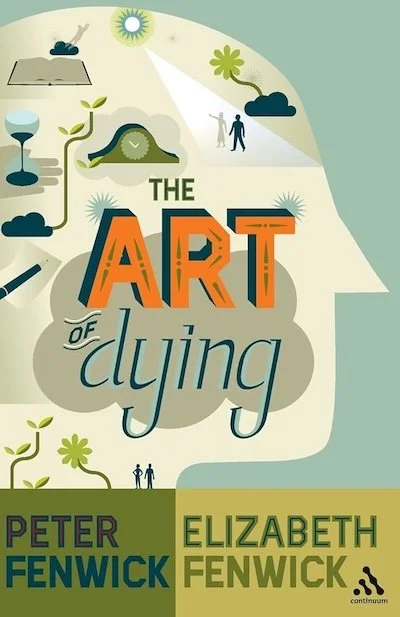
I recently read a strange book by the British writer Peter Fenwick and his wife Elizabeth, called The Art of Dying. It’s a collection of anecdotal evidence about people having deathbed visionary experiences in which their dead relatives come to collect them. It also describes incidents in which caregivers or family members see odd phenomena at the time of death, including strange behavior in animals. I found the book both fascinating and comforting.